
Contents
Overview
The conceptual roots of searching for extraterrestrial intelligence stretch back centuries, fueled by philosophical speculation about life on other worlds. However, the modern scientific pursuit truly ignited in the mid-20th century, catalyzed by the advent of radio astronomy. Frank Drake, often considered the father of SETI, initiated Project Ozma in 1960, using the Green Bank Telescope to listen for radio signals from nearby stars. This pioneering effort, though brief, laid the groundwork for future investigations. The subsequent detection of the Wow! signal by Jerry Ehman at Ohio State University provided a tantalizing, albeit unconfirmed, glimpse of what might be out there. The SETI Institute emerged as a pivotal organization, consolidating research efforts and fostering public engagement in the quest.
⚙️ How It Works
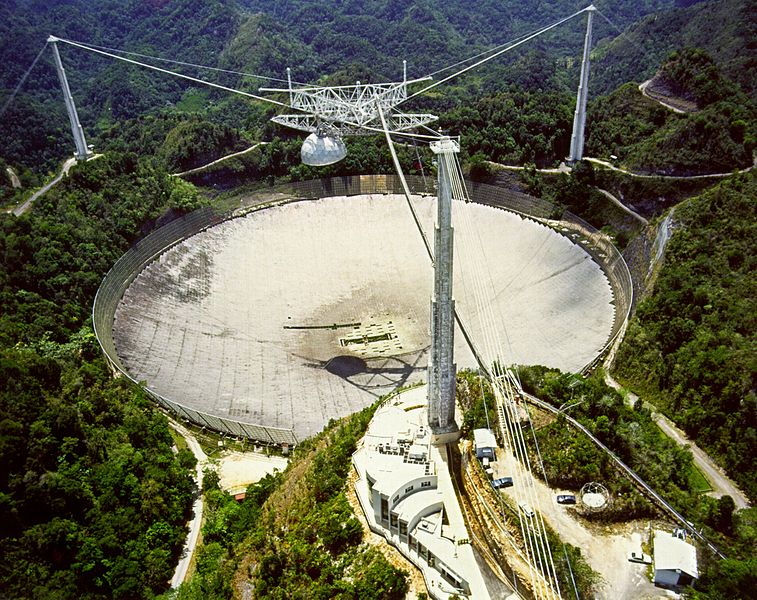
SETI employs a multi-pronged technological approach. The most common method involves using large radio telescopes, such as the Allen Telescope Array operated by the SETI Institute, to scan the skies for narrow-band radio signals that are unlikely to be produced by natural astrophysical phenomena. These signals are analyzed for patterns, artificiality, and potential information content. Optical SETI, pioneered by researchers like Stuart Shostak, searches for brief, powerful laser pulses that could be used for interstellar communication. More recently, initiatives like Breakthrough Listen have expanded the search to include a wider range of frequencies and celestial targets, leveraging vast computational power, including distributed computing projects like SETI@home, to sift through petabytes of data.
📊 Key Facts & Numbers
The scale of SETI is staggering. The Breakthrough Listen initiative represents the most comprehensive search to date. This project utilizes powerful telescopes like the Green Bank Telescope and the Parkes Observatory. Historically, SETI@home, a distributed computing project, engaged volunteers to analyze radio telescope data. The SETI Institute supports ongoing research and outreach programs. The sheer volume of data collected by these projects is measured in exabytes, a testament to the immense computational challenge involved.
👥 Key People & Organizations
Key figures in SETI include Frank Drake, whose Drake Equation attempts to estimate the number of communicative extraterrestrial civilizations in our galaxy. Jill Tarter, a former director of the SETI Institute, has been a leading voice in radio SETI for decades. Yuri Milner and Stephen Hawking co-founded Breakthrough Listen, injecting significant private funding into the field. The SETI Institute itself, based in Mountain View, California, is a primary hub for research, employing scientists and engineers dedicated to the search. Other significant organizations include the Parkes Observatory in Australia and the Green Bank Telescope in West Virginia, both crucial instruments in SETI endeavors.
🌍 Cultural Impact & Influence
The search for extraterrestrial intelligence has profoundly permeated global culture, inspiring countless works of science fiction, films, and literature. From Carl Sagan's novel and subsequent film Contact, which dramatized the discovery of an alien signal, to the enduring fascination with UFOs and alien encounters, SETI taps into a deep human desire to understand our place in the cosmos. The public's engagement, particularly through projects like SETI@home, demonstrates a widespread curiosity about the possibility of life beyond Earth. This cultural resonance has, in turn, often fueled further scientific interest and funding, creating a feedback loop between scientific inquiry and popular imagination. The very idea of 'aliens' is a cultural construct heavily shaped by SETI's ongoing narrative.
⚡ Current State & Latest Developments
Current SETI efforts are more sophisticated and data-intensive than ever before. Breakthrough Listen continues to be the flagship project, systematically surveying nearby stars and galaxies. Researchers are also exploring new avenues, such as searching for technosignatures beyond radio and optical signals, including atmospheric anomalies on exoplanets or evidence of megastructures. The SETI Institute is actively involved in astrobiology research, studying the origins and evolution of life on Earth to better inform the search for life elsewhere. Advances in artificial intelligence and machine learning are also being applied to analyze the massive datasets generated by telescopes, potentially accelerating the pace of discovery. The Allen Telescope Array continues its dedicated monitoring, adapting to new observational strategies.
🤔 Controversies & Debates
SETI is not without its critics and controversies. A primary debate centers on the 'Fermi Paradox' – if intelligent life is common, why haven't we detected any evidence? Skeptics question the assumption that extraterrestrial civilizations would use radio or optical signals, or that their signals would be decipherable. There are also debates about the allocation of resources; some argue that the vast sums spent on SETI could be better used to address pressing issues on Earth. The potential implications of a confirmed detection are also a source of debate, ranging from optimistic scenarios of interspecies understanding to pessimistic fears of societal disruption or even existential threat. The lack of definitive signals after decades of searching fuels ongoing skepticism.
🔮 Future Outlook & Predictions
The future of SETI is likely to involve increasingly sophisticated technology and broader observational strategies. The development of next-generation telescopes, both ground-based and space-based, will offer greater sensitivity and wider sky coverage. The search for technosignatures, encompassing a wider range of potential alien technologies, is expected to gain prominence. As our understanding of exoplanets deepens, SETI efforts may become more targeted, focusing on worlds with higher probabilities of harboring life. The integration of advanced AI for data analysis and signal detection will undoubtedly play a crucial role. Some futurists envision a future where humanity might even attempt to send its own interstellar messages, a concept explored in projects like Messaging Extraterrestrial Intelligence (METI).
💡 Practical Applications
While SETI's primary goal is detection, its methodologies have practical applications. The distributed computing infrastructure developed for SETI@home has been repurposed for other scientific research, such as protein folding simulations and climate modeling. The advanced signal processing techniques developed for analyzing faint extraterrestrial signals can also be applied to other fields, including medical imaging and telecommunications. Furthermore, the public engagement fostered by SETI initiatives has inspired countless students to pursue careers in science, technology, engineering, and mathematics (STEM), contributing to a broader scientific workforce. The technological innovation spurred by the search, from telescope design to data analysis, has ripple effects across various scientific disciplines.
Key Facts
- Category
- science
- Type
- topic