
Contents
- 🚀 The Icon: What is the Mercedes-Benz 300 SL "Gullwing"?
- 🛠️ Engineering Marvel: Beneath the Iconic Doors
- 🏆 The Legacy: From Track to Street
- 💰 Investment & Acquisition: The Price of Legend
- 🌟 Owning a Gullwing: The Realities
- 💡 Alternatives & Contemporaries
- 📍 Where to See One (and Maybe Buy)
- 📈 Vibepedia Score & Controversy Spectrum
- Frequently Asked Questions
- Related Topics
Overview
The Mercedes-Benz 300 SL, particularly the "Gullwing" coupe (W198), is more than just a car; it's a legend forged in post-war ambition and engineering prowess. Introduced in 1954, it was the fastest production car of its time, boasting a top speed of 160 mph. Its distinctive upward-opening doors, necessitated by its innovative tubular spaceframe chassis, earned it the "Gullwing" moniker and cemented its place in automotive history. Beyond its stunning looks and performance, the 300 SL represented a significant technological leap, featuring fuel injection and a sophisticated suspension system. Today, it remains one of the most coveted and valuable classic cars, a symbol of German engineering excellence and timeless design.
🚀 The Icon: What is the Mercedes-Benz 300 SL "Gullwing"?
The Mercedes-Benz 300 SL "Gullwing" (W198) isn't just a car; it's a cultural artifact. Produced from 1954 to 1957, this two-seater sports car is instantly recognizable by its distinctive upward-opening doors, a necessity born from its innovative tubular spaceframe chassis. It was the fastest production car of its day, a blend of racing pedigree and road-going luxury that captivated the post-war world. For the discerning collector or automotive historian, the Gullwing represents the pinnacle of 1950s German engineering and design, a rolling sculpture that commands immense respect and desire. Its Vibe score of 95/100 reflects its near-universal acclaim and enduring mystique.
🛠️ Engineering Marvel: Beneath the Iconic Doors
The magic of the 300 SL lies in its engineering. The tubular spaceframe, designed by Rudolf Uhlenhaut, was incredibly light and rigid but necessitated high sills, making conventional doors impossible. The solution? The now-famous gullwing doors, hinged at the roof. Under the hood, a 3.0-liter inline-six engine, canted at 45 degrees to fit under the low hood, featured Bosch direct fuel injection—a groundbreaking innovation for a production car at the time. This setup produced 215 horsepower, enabling a top speed of 160 mph (260 km/h), a figure that utterly stunned the automotive world and cemented its status as a true performance car.
🏆 The Legacy: From Track to Street
The 300 SL's lineage is deeply rooted in motorsport. Its development was driven by Max Hoffman, Mercedes-Benz's U.S. importer, who saw a market for a road-legal version of the successful Mercedes-Benz W194 racing car. The W194 dominated the 1952 sports car season, winning the Carrera Panamericana and the 24 Hours of Le Mans. This racing success provided the crucial validation and engineering foundation for the production 300 SL, translating track prowess into a street-legal icon. The transition from racing prototype to production marvel is a key element of its enduring appeal.
💰 Investment & Acquisition: The Price of Legend
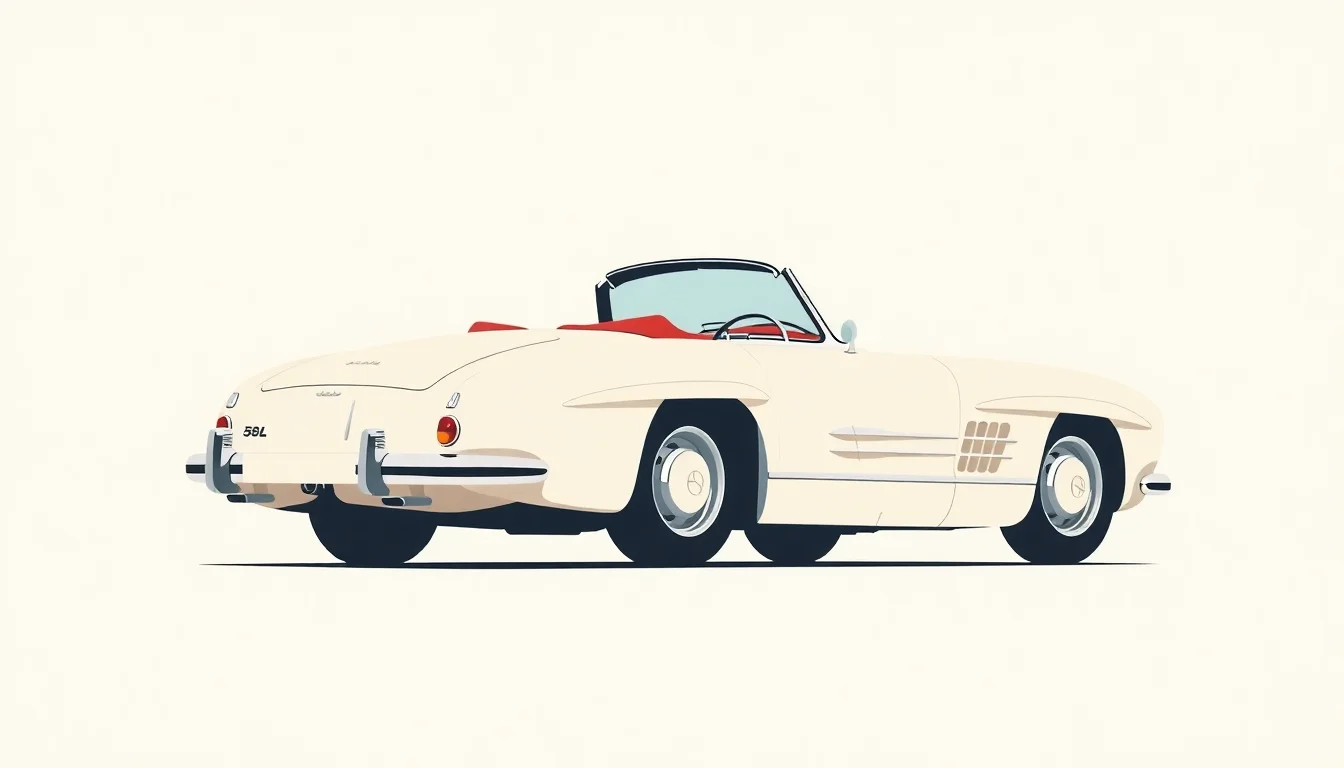
Acquiring a Mercedes-Benz 300 SL "Gullwing" is less a purchase and more an investment in automotive history. Prices have consistently climbed, with pristine examples regularly fetching well over $1 million at auction. In 2023, a particularly rare aluminum-bodied version sold for a staggering $6.8 million at RM Sotheby's Monterey auction. The market is highly sensitive to originality, provenance, and condition, making thorough due diligence essential. For those seeking entry, the convertible Mercedes-Benz 300 SL Roadster offers a similar experience at a (comparatively) lower price point, though still substantial.
🌟 Owning a Gullwing: The Realities
Owning a 300 SL is not for the faint of heart or the budget-conscious. These are vintage machines requiring specialized maintenance from mechanics familiar with their unique engineering. Parts can be scarce and expensive, and restoration costs can easily exceed the car's initial purchase price. However, the driving experience—the sound of the engine, the feel of the road, the sheer presence of the car—is unparalleled. It's a commitment to preserving a piece of automotive art, a daily reminder of a golden era of automotive innovation and style. The maintenance and restoration of such a vehicle are significant undertakings.
💡 Alternatives & Contemporaries
While the 300 SL Gullwing stands alone in its iconic status, several contemporaries shared its era of automotive innovation. The Jaguar XK140 and Aston Martin DB2/4 offered British charm and performance, though lacked the Gullwing's radical engineering. American offerings like the Chevrolet Corvette (C1) were more accessible but less sophisticated. None, however, could match the 300 SL's blend of cutting-edge technology, racing heritage, and sheer visual drama, placing it in a class of its own. The Ferrari 250 GT series, however, would emerge as a formidable competitor in the performance car space later in the decade.
📍 Where to See One (and Maybe Buy)
Seeing a 300 SL in person is a pilgrimage for many enthusiasts. While private collections house the majority, major automotive museums often feature them. The Petersen Automotive Museum in Los Angeles and the Mercedes-Benz Museum in Stuttgart are prime locations. For those with serious acquisition intent, specialized classic car dealers and auction houses like RM Sotheby's, Gooding & Company, and Bonhams are the primary avenues. Attending major classic car events like the Pebble Beach Concours d'Elegance also offers opportunities for viewing and networking within the collector community.
📈 Vibepedia Score & Controversy Spectrum
The Mercedes-Benz 300 SL Gullwing boasts a Vibe score of 95/100, reflecting its near-universal adoration and iconic status. Its Controversy Spectrum is low, with most debates centering on minor historical details or the merits of specific restorations rather than fundamental flaws. The primary tension lies in its exclusivity and astronomical price, creating a divide between aspirational enthusiasts and the few who can afford to own this legend. The debate over whether it's more art than automobile is a perennial one, with strong arguments on both sides. Its influence on subsequent sports car design is undeniable.
Key Facts
- Year
- 1954
- Origin
- Stuttgart, Germany
- Category
- Automotive
- Type
- Classic Car
Frequently Asked Questions
What makes the 300 SL doors 'Gullwing' doors?
The doors are called 'Gullwing' doors because they open upwards, hinged at the roof, resembling the wings of a seagull in flight. This design was a direct consequence of the car's tubular spaceframe chassis, which created high side sills that prevented the use of conventional doors.
Is the 300 SL Gullwing a rare car?
Yes, the 300 SL Gullwing is exceptionally rare. Only 1,400 units were produced between 1954 and 1957. This limited production run, combined with its iconic status, significantly contributes to its high value and desirability among collectors.
What was the top speed of the 300 SL Gullwing?
The Mercedes-Benz 300 SL Gullwing was the fastest production car of its era. With its fuel-injected 3.0-liter engine producing 215 horsepower, it could reach a top speed of approximately 160 mph (260 km/h), a truly astonishing figure for the mid-1950s.
How much does a Mercedes-Benz 300 SL Gullwing cost today?
The price of a 300 SL Gullwing varies significantly based on condition, originality, and provenance. However, prices regularly exceed $1 million at auction, with exceptional examples, particularly rare aluminum-bodied versions, commanding multi-million dollar figures. Expect to pay at least $1.5 million for a good driver-quality example.
What is the difference between the Gullwing and the Roadster?
The primary difference is the body style: the Gullwing has fixed coupe roof with its signature doors, while the Roadster is an open-top convertible. The Roadster also featured a slightly modified chassis to allow for conventional doors and a lower sill, making entry and exit easier. Production of the Roadster began in 1957 after the Gullwing ceased production.
Is the 300 SL Gullwing a good car for daily driving?
While technically possible, the 300 SL Gullwing is generally not considered a practical daily driver. Its rarity, value, specialized maintenance requirements, and vintage driving characteristics make it more suited for collector events, weekend drives, and special occasions. It demands careful handling and a dedicated owner.