
Contents
Overview
The McTwist trick, named after its originator Mike McGill, burst onto the skateboarding scene in 1984. McGill, a prominent member of the Powell-Peralta skate team, landed the trick during a competition at the Del Mar Skate Ranch in California. Prior to the McTwist, aerial maneuvers were largely confined to 180 or 360-degree rotations. McGill's innovation was to combine a full 360-degree spin with an additional 180 degrees, creating a disorienting yet fluid 540-degree rotation while airborne. This groundbreaking feat immediately elevated the standard for vert skateboarding, demonstrating a new level of aerial control and creativity. The trick's name itself, a portmanteau of McGill's surname and the common term 'Mc' used in other skateboarding tricks like the 'McNasty', cemented its place in skate lexicon.
⚙️ How It Works
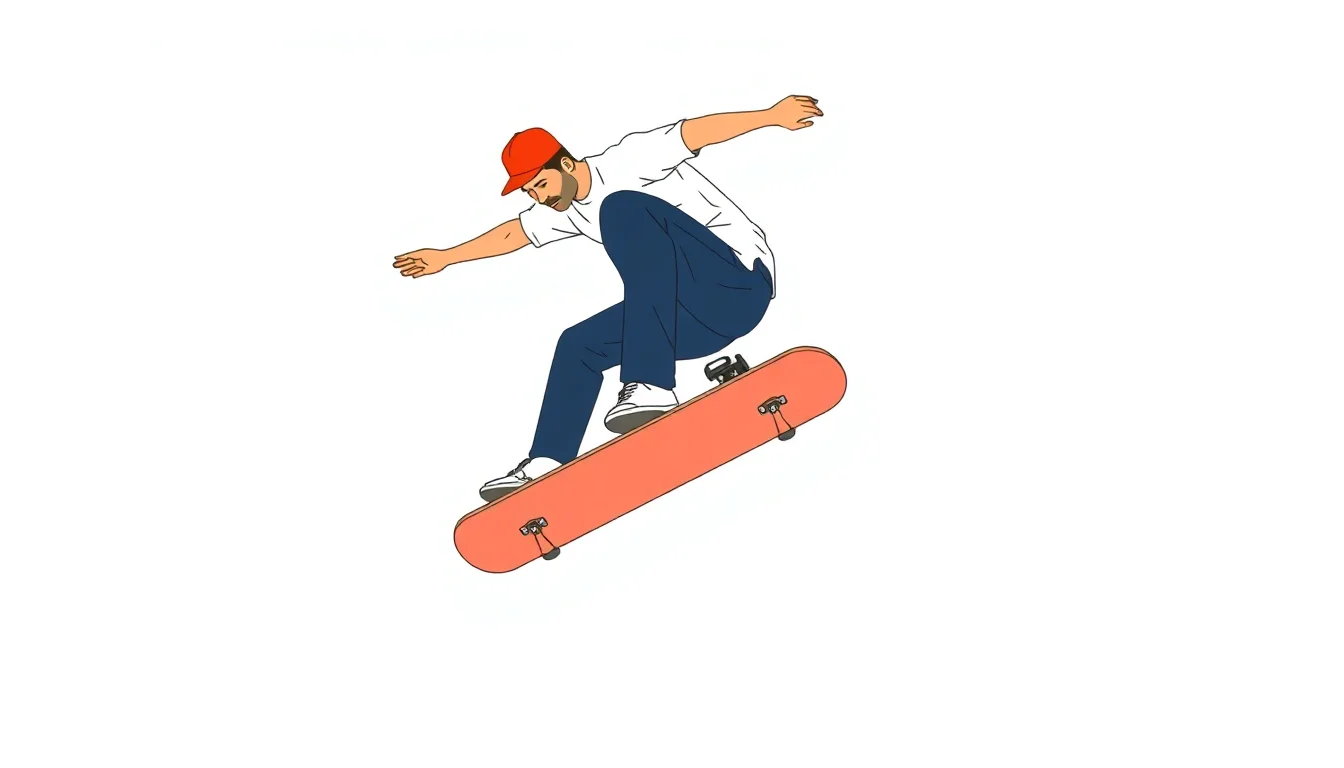
Executing a McTwist requires a significant amount of speed and airtime generated from a vert ramp or a large half-pipe. The skateboarder approaches the lip of the ramp, typically ollieing just as their front wheels clear the coping. The core of the trick is the body's rotation: the rider initiates a powerful spin, using their arms and shoulders to drive the momentum. As the board and body rotate through 540 degrees, the rider must maintain control, keeping the board underfoot. The landing is critical, requiring the skateboarder to spot their landing zone on the ramp and absorb the impact with bent knees. Different variations exist, including different grabs (how the rider holds the board mid-air), but the 540-degree rotation remains the defining characteristic.
📊 Key Facts & Numbers
The McTwist trick is a testament to the progression of skateboarding, with its difficulty often measured by the height and control achieved. The trick's introduction in 1984 marked a significant leap; by the late 1980s, it was considered a staple for any serious vert skater. Competitions like the X Games often feature skaters attempting variations of the McTwist, with successful landings contributing significantly to scores. While exact statistics on the number of skateboarders who can successfully land a McTwist are unavailable, it is estimated to be a skill possessed by less than 5% of all skateboarders globally, highlighting its elite status.
👥 Key People & Organizations
The McTwist is inextricably linked to Mike McGill, the skater credited with its invention in 1984. McGill, a key figure in the golden era of vert skateboarding, rode for Powell-Peralta, a legendary skateboard company founded by Stacy Peralta and George Powell. Other influential skaters who popularized and refined the McTwist include Tony Hawk, Christian Hosoi, and Steve Caballero, all of whom pushed the trick's execution in their own styles. The International Skateboarding Federation (ISF) and organizations like The Skateboarding Hall of Fame recognize the McTwist as a pivotal trick in the sport's history.
🌍 Cultural Impact & Influence
The McTwist didn't just add a new trick to the skateboarding lexicon; it fundamentally altered the perception of what was achievable in aerial maneuvers. Its successful execution demonstrated a new level of mastery over gravity and body mechanics, inspiring countless skaters to push their own limits. The trick became a visual shorthand for advanced skateboarding, frequently featured in skate videos and magazines of the 1980s and 1990s, such as Thrasher Magazine and TransWorld SKATEboarding. Its influence can be seen in the development of even more complex aerials and rotations in both skateboarding and related sports like BMX freestyle and wakeboarding. The McTwist is more than a trick; it's a cultural touchstone for a generation of skaters.
⚡ Current State & Latest Developments
As of 2024, the McTwist remains a highly respected and challenging trick within professional vert skateboarding. While newer, more complex rotations and combinations have emerged, the McTwist is still a foundational element for aspiring pros. Competitions continue to feature it, and skaters are constantly seeking to add their own flair, such as combining it with different grabbles or performing it out of unique ramp transitions. The trick's legacy is also preserved through retrospectives and historical documentaries about skateboarding's evolution. Recent developments in ramp construction and skate park design continue to provide ideal environments for executing such high-flying maneuvers.
🤔 Controversies & Debates
One of the primary debates surrounding the McTwist, and indeed many skateboarding tricks, revolves around its naming convention. While named after Mike McGill, some argue that the 'Mc' prefix, popularized by Ron Peralta (not related to Stacy Peralta) with the 'McNasty' (a backside 540 invented by Doug McGregor), might dilute the individual achievement. However, the McTwist is widely accepted and recognized by its name, with McGill's contribution to its popularization undeniable. Another point of discussion is the continuous evolution of aerials; some purists argue that the original McTwist's raw power and simplicity are being overshadowed by overly technical, less fluid variations.
🔮 Future Outlook & Predictions
The future of the McTwist is likely one of continued relevance as a benchmark trick, rather than a constant point of innovation. As skaters develop even greater aerial capabilities, the McTwist may become a prerequisite for more complex combinations. We might see further refinements in technique, such as increased height or smoother transitions into and out of the rotation. It's also possible that the McTwist could find new life in emerging disciplines or hybrid sports that incorporate ramp-based aerials. The enduring appeal of a perfectly executed 540-degree spin suggests it will remain a celebrated maneuver for years to come.
💡 Practical Applications
The McTwist's primary application is within the sport of skateboarding, specifically in the disciplines of vert skateboarding and mega ramp skating. It serves as a key maneuver for competitive skaters aiming for high scores in events like the X Games and Dew Tour. Beyond competition, it's a demonstration of mastery and a source of inspiration for amateur skaters. The trick's visual spectacle also makes it a popular element in skateboarding films and media, contributing to the sport's aesthetic appeal and cultural narrative. For aspiring skaters, learning the McTwist represents a significant milestone in their progression.
Key Facts
- Category
- aesthetics
- Type
- concept