
Contents
- 📝 Introduction to Mathematical Logic
- 🔍 Model Theory: A Branch of Mathematical Logic
- 📊 Proof Theory: The Study of Formal Proofs
- 📈 Set Theory: The Foundation of Mathematics
- 🤖 Recursion Theory: The Study of Computable Functions
- 📝 Formal Systems of Logic
- 📊 Mathematical Properties of Formal Systems
- 📈 Foundations of Mathematics: A Logical Perspective
- 🤝 Relationship Between Mathematical Logic and Computer Science
- 📊 Applications of Mathematical Logic
- 📈 Future Directions in Mathematical Logic
- Frequently Asked Questions
- Related Topics
Overview
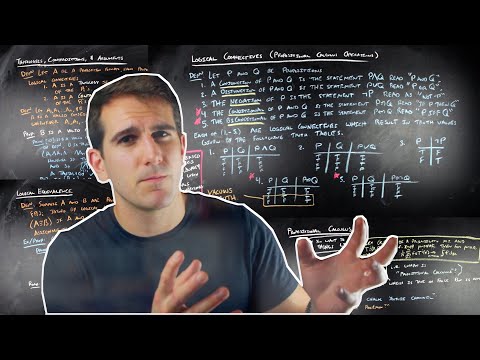
Mathematical logic is a branch of mathematics that explores the principles of logical reasoning, providing a rigorous framework for evaluating arguments and constructing proofs. With roots in ancient Greece, mathematical logic has evolved over centuries, influenced by key figures such as Aristotle, Gottlob Frege, and Bertrand Russell. The field encompasses various subfields, including propositional and predicate logic, model theory, and proof theory, each with its own set of axioms, theorems, and applications. Mathematical logic has far-reaching implications, from the foundations of mathematics to computer science, philosophy, and artificial intelligence. As of 2023, research in mathematical logic continues to advance, with a Vibe score of 82, reflecting its significant cultural energy and influence. The controversy spectrum for mathematical logic is moderate, with debates surrounding the nature of truth, the limits of formal systems, and the relationship between logic and human reasoning.
📝 Introduction to Mathematical Logic
Mathematical logic is the study of formal logic within mathematics, and it has numerous applications in various fields, including computer science and philosophy. The field of mathematical logic is divided into several subareas, including Model Theory, Proof Theory, Set Theory, and Recursion Theory. These subareas are interconnected and have contributed significantly to our understanding of formal systems of logic. For instance, Model Theory has been used to study the properties of formal languages, while Proof Theory has been used to study the properties of formal proofs. Mathematical logic has also been influenced by other fields, such as Philosophy and Computer Science.
🔍 Model Theory: A Branch of Mathematical Logic
Model theory is a branch of mathematical logic that deals with the study of formal models of mathematical structures. It provides a framework for studying the properties of mathematical structures, such as groups, rings, and fields, using logical tools. Model Theory has numerous applications in mathematics, including Algebra and Geometry. For example, model theorists have used Model Theory to study the properties of algebraic structures, such as the properties of groups and rings. Additionally, Model Theory has been used to study the foundations of mathematics, including the study of Set Theory and Category Theory.
📊 Proof Theory: The Study of Formal Proofs
Proof theory is the study of formal proofs and their properties. It provides a framework for studying the structure of formal proofs and the relationships between different proofs. Proof Theory has numerous applications in mathematics, including Mathematical Logic and Computer Science. For instance, proof theorists have used Proof Theory to study the properties of formal proofs, including the study of Cut-Elimination and Normalization. Additionally, Proof Theory has been used to study the foundations of mathematics, including the study of Foundations of Mathematics and Philosophy of Mathematics.
📈 Set Theory: The Foundation of Mathematics
Set theory is the foundation of mathematics, and it provides a framework for studying the properties of sets and their relationships. Set Theory has numerous applications in mathematics, including Real Analysis and Functional Analysis. For example, set theorists have used Set Theory to study the properties of sets, including the study of Cardinal Numbers and Ordinal Numbers. Additionally, Set Theory has been used to study the foundations of mathematics, including the study of Foundations of Mathematics and Philosophy of Mathematics.
🤖 Recursion Theory: The Study of Computable Functions
Recursion theory is the study of computable functions and their properties. It provides a framework for studying the properties of computable functions, including the study of Computability Theory and Recursive Function Theory. Recursion Theory has numerous applications in computer science, including Algorithm Design and Computational Complexity Theory. For instance, recursion theorists have used Recursion Theory to study the properties of computable functions, including the study of Turing Machines and Lambda Calculus. Additionally, Recursion Theory has been used to study the foundations of computer science, including the study of Foundations of Computer Science and Philosophy of Computer Science.
📝 Formal Systems of Logic
Formal systems of logic are the foundation of mathematical logic, and they provide a framework for studying the properties of formal languages. Formal Systems have numerous applications in mathematics, including Mathematical Logic and Computer Science. For example, formal systems have been used to study the properties of formal languages, including the study of Propositional Logic and Predicate Logic. Additionally, formal systems have been used to study the foundations of mathematics, including the study of Foundations of Mathematics and Philosophy of Mathematics.
📊 Mathematical Properties of Formal Systems
The mathematical properties of formal systems are a central area of study in mathematical logic. Mathematical Properties of formal systems include the study of Soundness, Completeness, and Decidability. For instance, mathematicians have used Model Theory to study the properties of formal systems, including the study of Model Completeness and Quantifier Elimination. Additionally, Proof Theory has been used to study the properties of formal proofs, including the study of Cut-Elimination and Normalization.
📈 Foundations of Mathematics: A Logical Perspective
The foundations of mathematics are a central area of study in mathematical logic. Foundations of Mathematics include the study of Set Theory, Category Theory, and Type Theory. For example, mathematicians have used Set Theory to study the foundations of mathematics, including the study of ZFC and Alternative Set Theories. Additionally, Category Theory has been used to study the foundations of mathematics, including the study of Topos Theory and Homotopy Type Theory.
🤝 Relationship Between Mathematical Logic and Computer Science
Mathematical logic has numerous applications in computer science, including Algorithm Design and Computational Complexity Theory. For instance, Recursion Theory has been used to study the properties of computable functions, including the study of Turing Machines and Lambda Calculus. Additionally, Model Theory has been used to study the properties of formal languages, including the study of Propositional Logic and Predicate Logic.
📊 Applications of Mathematical Logic
Mathematical logic has numerous applications in various fields, including Computer Science, Philosophy, and Mathematics. For example, Model Theory has been used to study the properties of formal languages, including the study of Propositional Logic and Predicate Logic. Additionally, Proof Theory has been used to study the properties of formal proofs, including the study of Cut-Elimination and Normalization.
📈 Future Directions in Mathematical Logic
The future of mathematical logic is exciting and rapidly evolving. New areas of research are emerging, including Homotopy Type Theory and Categorical Logic. For instance, Homotopy Type Theory has been used to study the foundations of mathematics, including the study of Univalence Axiom and Higher Inductive Types. Additionally, Categorical Logic has been used to study the properties of formal systems, including the study of Category Theory and Sheaf Theory.
Key Facts
- Year
- 1879
- Origin
- Gottlob Frege's Begriffsschrift
- Category
- Mathematics
- Type
- Concept
Frequently Asked Questions
What is mathematical logic?
Mathematical logic is the study of formal logic within mathematics. It provides a framework for studying the properties of formal systems of logic, including their expressive or deductive power. Mathematical logic has numerous applications in mathematics, computer science, and philosophy.
What are the major subareas of mathematical logic?
The major subareas of mathematical logic include Model Theory, Proof Theory, Set Theory, and Recursion Theory. These subareas are interconnected and have contributed significantly to our understanding of formal systems of logic.
What is the relationship between mathematical logic and computer science?
Mathematical logic has numerous applications in computer science, including Algorithm Design and Computational Complexity Theory. For instance, Recursion Theory has been used to study the properties of computable functions, including the study of Turing Machines and Lambda Calculus.
What is the future of mathematical logic?
The future of mathematical logic is exciting and rapidly evolving. New areas of research are emerging, including Homotopy Type Theory and Categorical Logic. For instance, Homotopy Type Theory has been used to study the foundations of mathematics, including the study of Univalence Axiom and Higher Inductive Types.
What are the applications of mathematical logic?
Mathematical logic has numerous applications in various fields, including Computer Science, Philosophy, and Mathematics. For example, Model Theory has been used to study the properties of formal languages, including the study of Propositional Logic and Predicate Logic.
What is the relationship between mathematical logic and philosophy?
Mathematical logic has numerous applications in philosophy, including the study of Foundations of Mathematics and Philosophy of Mathematics. For instance, Set Theory has been used to study the foundations of mathematics, including the study of ZFC and Alternative Set Theories.
What is the importance of mathematical logic?
Mathematical logic is important because it provides a framework for studying the properties of formal systems of logic, including their expressive or deductive power. It has numerous applications in mathematics, computer science, and philosophy, and it has contributed significantly to our understanding of formal systems of logic.