
Contents
Overview
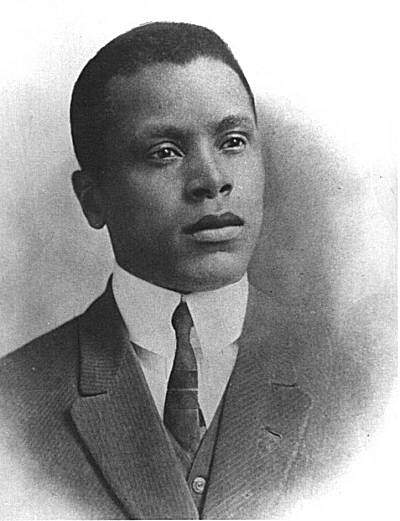
Black cinema encompasses the vast and complex landscape of films created by, for, and about Black people, primarily originating from the United States but with significant global reach. From its inception, this cinematic tradition has grappled with issues of representation, identity, and systemic discrimination, often existing in parallel to, and in defiance of, mainstream Hollywood narratives. Early efforts, like those of Oscar Micheaux, carved out spaces for Black stories and actors during eras of overt segregation. The mid-20th century saw the rise of Blaxploitation films, which, while often controversial, brought Black leads and narratives to wider audiences. Contemporary Black cinema, spearheaded by directors like Ava DuVernay and Ryan Coogler, has achieved critical acclaim and commercial success, exploring diverse themes and achieving unprecedented box office numbers.
🎵 Origins & History
The genesis of Black cinema is inextricably linked to the very beginnings of filmmaking in the United States, emerging as a vital counter-narrative to the pervasive racism and limited roles offered by early Hollywood. Early filmmakers began producing films specifically for Black audiences, bypassing the discriminatory practices of the dominant industry. These early works, often distributed through a separate circuit, addressed themes relevant to the Black experience, from rural life to urban migration, laying the groundwork for a distinct cinematic identity. The era of race films between the 1910s and 1950s saw hundreds of independent productions, often with limited budgets but immense cultural significance, providing crucial on-screen representation for Black actors and storytellers.
⚙️ The Mechanics of Representation
The 'mechanics' of Black cinema are less about technical processes and more about the strategic navigation of systemic barriers and the deliberate construction of Black representation. Historically, this involved creating independent production companies, distribution networks, and exhibition spaces outside of the white-dominated studio system. Directors and producers had to contend with limited funding, often relying on community support and innovative distribution models. The casting of Black actors, the portrayal of Black characters, and the thematic focus of these films were all conscious decisions aimed at challenging stereotypes, affirming Black identity, and speaking directly to Black audiences. This often meant subverting or directly confronting the 'Magical Negro' trope and the 'Mammy' stereotype that plagued mainstream cinema, as seen in the nuanced portrayals in films like 'Do the Right Thing' (1989).
📊 Key Facts & Numbers
Black cinema has consistently defied expectations with remarkable statistical achievements. The Blaxploitation era of the 1970s, despite its controversies, yielded significant box office successes, with films like 'Shaft' (1971) grossing over $12 million against a $1 million budget. The 1990s saw a resurgence with films like 'Boyz n the Hood' (1991) earning $57.5 million worldwide on a $6 million budget. More recently, Ryan Coogler's 'Black Panther' (2018) shattered records, becoming the first superhero film to be nominated for the Academy Award for Best Picture and grossing an astounding $1.347 billion globally. In 2023, films like 'The Color Purple' (2023) demonstrated continued audience appetite, with its musical adaptation earning $64 million domestically. The Academy Awards have also seen increased recognition, with Lupita Nyong'o winning Best Supporting Actress for '12 Years a Slave' (2013) and Daniel Kaluuya winning for 'Judas and the Black Messiah' (2021).
👥 Key Figures & Movements
The landscape of Black cinema is populated by pioneering figures and influential movements. Oscar Micheaux stands as a titan, directing and producing over 40 films between 1919 and 1948, often tackling complex racial issues. The Harlem Renaissance in the 1920s and 30s, while primarily a literary and artistic movement, also saw cinematic contributions, including films like 'The Scar of Shame' (1927). The 1970s were defined by the Blaxploitation genre, featuring stars like Pam Grier and Jim Brown, and directors like Gordon Parks Sr.. The late 1980s and 1990s ushered in the era of Spike Lee, John Singleton, and The Hughes Brothers, who brought a new wave of socially conscious and critically acclaimed films. More recently, the 'Black New Hollywood' movement, encompassing directors like Ava DuVernay, Nael H. King, and Chloé Zhao (though Zhao is not Black, her work often intersects with themes of marginalized communities), has continued to push boundaries.
🌍 Cultural Impact & Influence
The cultural impact of Black cinema is profound and far-reaching, shaping not only Black identity but also influencing mainstream culture and global cinematic trends. Films have served as crucial tools for social commentary, activism, and the preservation of Black history and culture, offering narratives that challenge stereotypes and celebrate Black excellence. From the groundbreaking representation in 'Imitation of Life' (1959) to the cultural phenomenon of 'Black Panther' (2018), these films have provided essential visibility and fostered a sense of community and pride. The aesthetic innovations and storytelling techniques developed within Black cinema have also permeated Hollywood, influencing filmmaking styles and narrative approaches across genres. The global success of films like 'Parasite' (2019), which shares thematic concerns with earlier Black cinema regarding class and social inequality, highlights the universal resonance of stories from marginalized perspectives.
⚡ Current State & Latest Developments
The current state of Black cinema is one of unprecedented opportunity and continued evolution. Following the commercial and critical success of films like 'Get Out' (2017), 'Us' (2019), and 'Black Panther' (2018), major studios are investing more heavily in Black-led projects and diverse storytelling. Streaming platforms like Netflix and Max have become significant avenues for Black filmmakers, providing both a platform for established talent and a launchpad for emerging voices. The rise of independent Black filmmakers and production companies, such as Oprah Winfrey's Harpo Films and Will Smith's Westbrook Studios, further diversifies the industry. The ongoing discourse around diversity and inclusion in Hollywood, amplified by movements like #OscarsSoWhite, continues to push for greater representation both in front of and behind the camera, with recent years seeing a record number of Black Oscar nominations and wins.
🤔 Controversies & Debates
Despite its advancements, Black cinema remains a site of ongoing debate and controversy. The Blaxploitation era, while popular, faced criticism for perpetuating stereotypes and glorifying violence, leading to discussions about artistic freedom versus social responsibility. The question of who defines 'Black cinema' is also a point of contention: should it be solely films made by Black filmmakers, or does it include films that simply feature Black characters and themes, even if made by non-Black creators? The commercial pressures of Hollywood can also lead to the 'whitewashing' of Black stories or the creation of films that cater to broader, often white, audiences, potentially diluting the authentic voice of the community. Furthermore, debates persist regarding the equitable distribution of resources and opportunities within the industry, ensuring that Black filmmakers have sustained access to funding and creative control.
🔮 Future Outlook & Predictions
The future of Black cinema appears robust, driven by a new generation of talent and an increasing demand for diverse narratives. We can anticipate a continued expansion of genres, with Black filmmakers exploring science fiction, fantasy, animation, and international co-productions with greater frequency. The influence of digital platforms will likely grow, offering more direct avenues for creators to reach global audiences and potentially fostering more independent and niche productions. There's also a growing emphasis on international Black cinema, with filmmakers from Africa, the Caribbean, and Europe gaining more international recognition, promising a richer, more interconnected global Black cinematic landscape. The ongoing push for authentic storytelling and the dismantling of systemic barriers suggest a future where Black voices are not only heard but are central to the cinematic conversation.
💡 Practical Applications
Black cinema's influence extends beyond the screen into various practical applications and cultural touchstones. Films have been used as educational tools to teach history, promote social awareness, and foster empathy, particu
Key Facts
- Category
- culture
- Type
- topic