
Contents
Overview
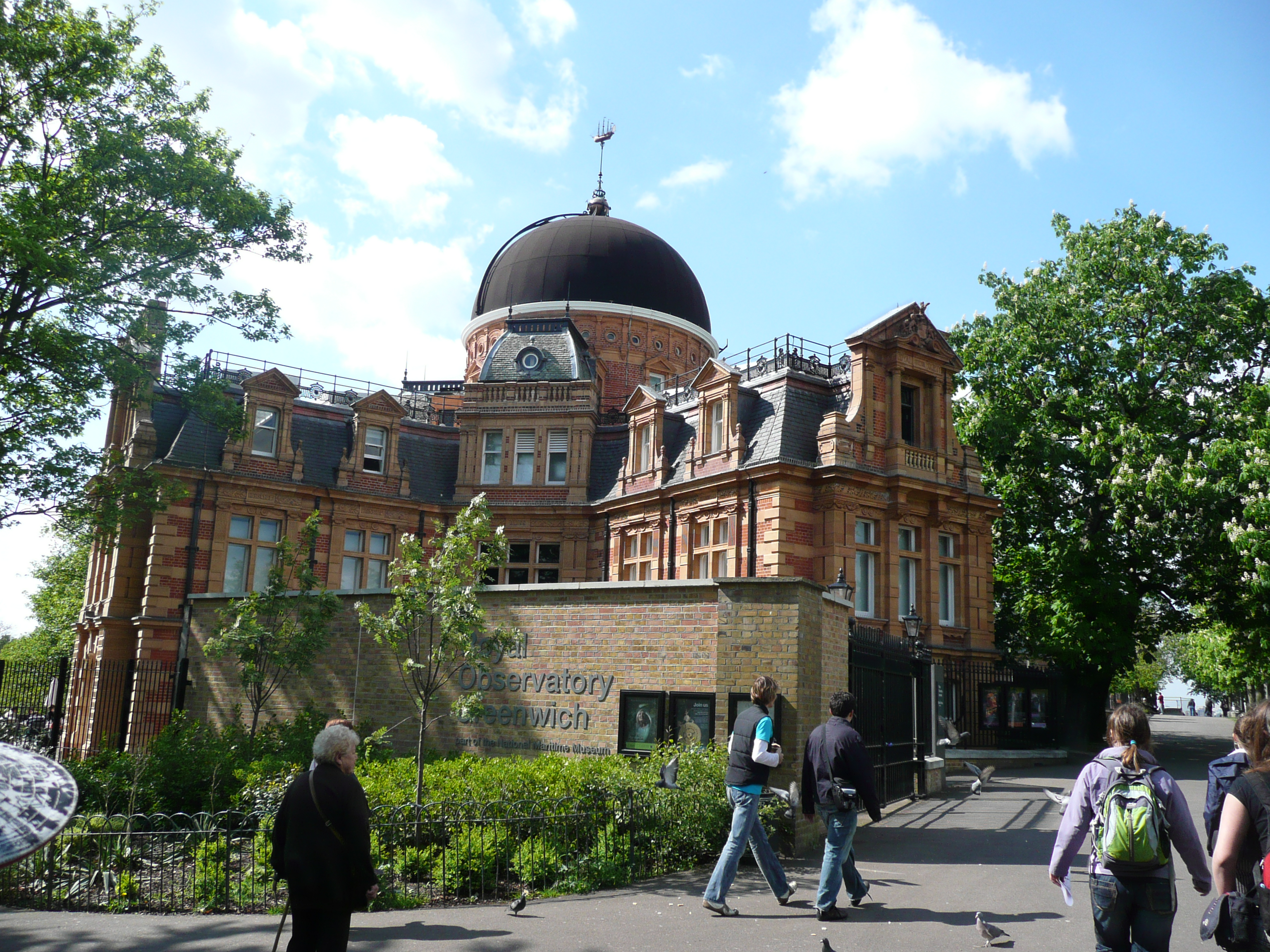
The genesis of astronomical observatories stretches back millennia, predating formal scientific inquiry. Ancient civilizations, including the Inca in Machu Picchu and the Maya in Mesoamerica, constructed megalithic sites like Chichen Itza that precisely aligned with celestial events, serving as calendars and navigational aids. The Ziggurat of Ur in Mesopotamia also likely served astronomical observation purposes. By the Hellenistic period, Greek astronomers like Ptolemy utilized rudimentary instruments and fixed structures, such as the Library of Alexandria's associated facilities, to chart the stars. The Islamic Golden Age saw significant advancements with observatories like the Maragheh Observatory and the Ulugh Beg Observatory, which produced highly accurate astronomical tables. Europe's Renaissance and Scientific Revolution spurred the construction of dedicated observatories, such as the Royal Observatory, Greenwich, which became a global standard for timekeeping and astronomical measurement.
⚙️ How It Works
At their core, astronomical observatories are designed to capture and analyze electromagnetic radiation from celestial objects. Optical observatories house telescopes that collect visible light, often employing mirrors or lenses to focus photons onto detectors like CCDs or photographic plates. Radio observatories utilize large dish antennas to capture radio waves, often combining signals from multiple dishes to achieve higher resolution through interferometry, as seen with the Very Large Array (VLA). Other observatories are specialized for different wavelengths, such as X-ray (e.g., Chandra X-ray Observatory) or infrared (e.g., Spitzer Space Telescope). Many modern observatories are located in remote, high-altitude areas to minimize atmospheric distortion and light pollution, or they are placed in space, like the Kepler Space Telescope, to escape Earth's atmosphere entirely.
📊 Key Facts & Numbers
The scale of modern astronomical observatories is staggering. The Extremely Large Telescope (ELT) is under construction in Chile. The Square Kilometre Array (SKA), a distributed radio telescope project spanning multiple continents, will eventually comprise millions of antennas. The Hubble Space Telescope, launched in 1990, has provided over 3 million observations and has a replacement cost that would likely exceed $10 billion today. The Perkins Telescope at the Lowell Observatory has been in continuous operation since 1931. Globally, there are over 1,000 professional astronomical observatories, with hundreds more dedicated to amateur astronomy.
👥 Key People & Organizations
Pioneering astronomers and institutions have shaped the observatory landscape. Galileo Galilei was among the first to systematically use a telescope for astronomical observation, publishing his findings in Sidereus Nuncius. Isaac Newton developed the reflecting telescope, a design still prevalent today. Key organizations like the European Southern Observatory (ESO) manage some of the world's most advanced facilities, including the Paranal Observatory housing the VLT. The National Science Foundation (NSF) in the US funds major observatories like the W. M. Keck Observatory. Visionaries like Robert Goddard pushed the boundaries of rocketry, paving the way for space-based observatories, while figures like Edwin Hubble used ground-based telescopes to revolutionize our understanding of the universe's scale.
🌍 Cultural Impact & Influence
Observatories have profoundly influenced human culture and our perception of the cosmos. From ancient cultures using celestial alignments for religious and agricultural purposes, to the Enlightenment era where observatories became symbols of scientific progress and national prestige, their impact is undeniable. The images captured by observatories like Hubble and JWST have become iconic, shaping public imagination and inspiring countless works of art, literature, and film. The search for extraterrestrial life, often conducted using radio observatories like the Arecibo Observatory (before its collapse), has fueled science fiction narratives and philosophical debates about humanity's place in the universe. The very concept of a 'cosmic perspective' is largely a product of the data and imagery emanating from these scientific outposts.
⚡ Current State & Latest Developments
The current era is marked by an unprecedented push towards larger, more sensitive instruments and a greater reliance on international collaboration. The Extremely Large Telescope (ELT) is set to begin operations soon. The Nancy Grace Roman Space Telescope is scheduled for launch in the coming years. Meanwhile, the Square Kilometre Array (SKA) is progressing towards full construction, aiming to revolutionize radio astronomy. There's also a growing trend towards distributed observatories and citizen science projects, such as Zooniverse, which engage the public in analyzing astronomical data, democratizing discovery.
🤔 Controversies & Debates
The construction and operation of observatories are not without controversy. The immense cost of flagship projects like the James Webb Space Telescope often sparks debate about resource allocation, with critics questioning whether such funds could be better spent on terrestrial issues. The siting of major observatories, particularly in pristine environments like Mauna Kea in Hawaii, has led to significant conflicts with indigenous communities who consider these mountains sacred. Furthermore, the increasing prevalence of satellite constellations, such as Starlink, poses a growing threat to ground-based optical and radio astronomy by creating streaks and interference in observations, a concern actively being addressed by organizations like the International Astronomical Union (IAU).
🔮 Future Outlook & Predictions
The future of astronomical observatories points towards even larger apertures, enhanced sensitivity across the electromagnetic spectrum, and a continued shift towards space-based platforms. Concepts like the Lunar Far-Infrared Telescope and the Habitable Zone Telescope are being explored, leveraging the Moon's stable, radio-quiet environment. Gravitational wave observatories like Virgo and Kagra are expanding, promising new windows into cosmic events like black hole mergers. The development of AI and machine learning is also poised to transform data analysis, enabling observatories to sift through petabytes of information and identify subtle signals that might otherwise be missed, accelerating the pace of discovery.
💡 Practical Applications
Astronomical observatories have direct practical applications beyond pure scientific research. Historically, their precise measurements of celestial bodies were fundamental for developing accurate calendars and navigational systems, crucial for trade, exploration, and agriculture. Modern observatories contribute to technologies that have found their way into everyday life, such as CCD sensors (originally developed for astronomical imaging) now found in digital cameras and smartphon
Key Facts
- Category
- science
- Type
- topic