
Contents
Overview
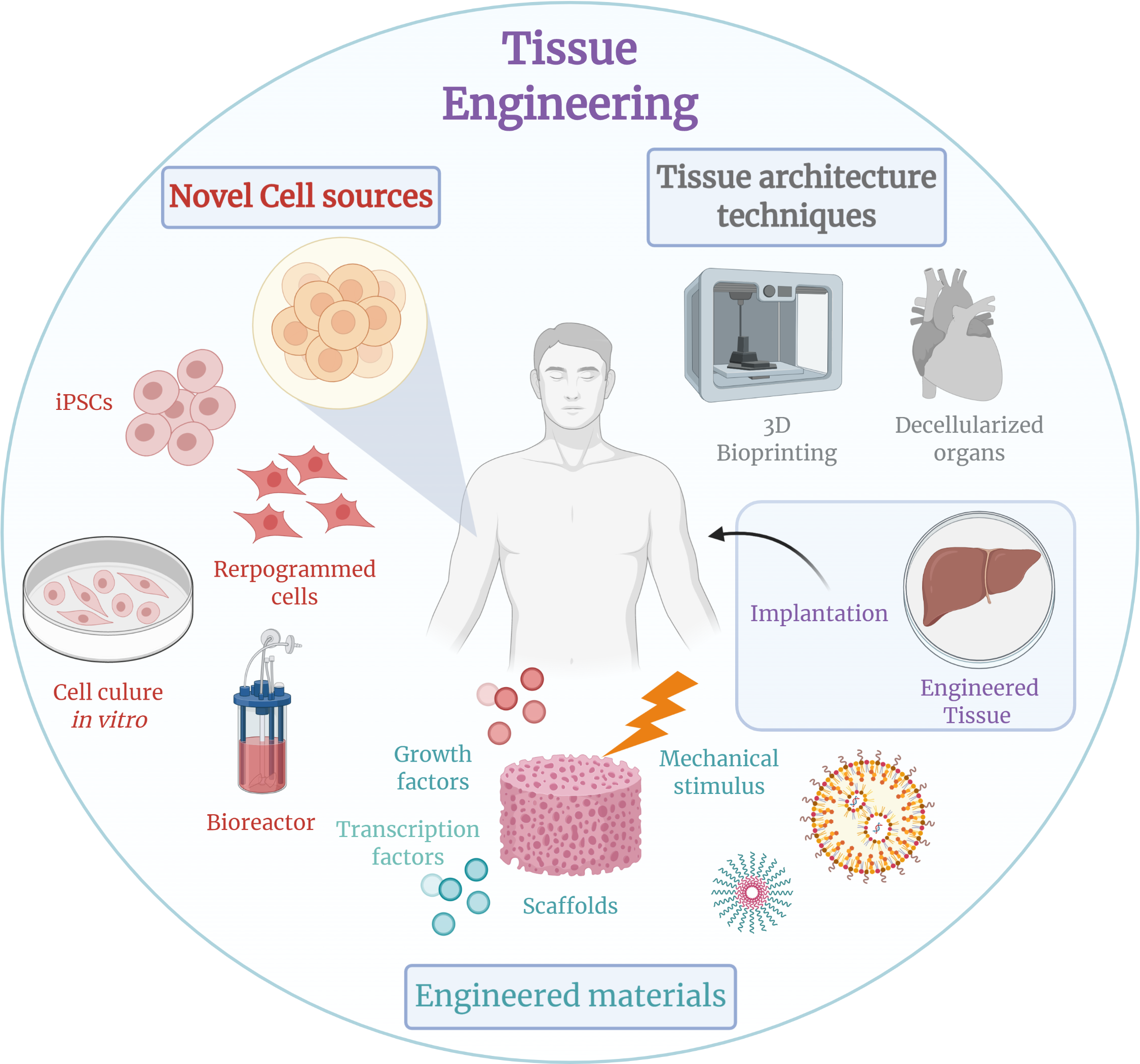
Artificial tissues, also known as tissue engineering, is a biomedical engineering discipline that combines cells, engineering, materials methods, and suitable biochemical and physicochemical factors to restore, maintain, improve, or replace different types of biological tissues. Scientists at Harvard University have used 3D printing to create artificial tissues that can mimic the structure and function of natural tissues. The process of creating artificial tissues involves several steps, including the design and fabrication of tissue scaffolds, the isolation and culture of cells, and the integration of cells and scaffolds to form functional tissues. Artificial skin has been used to treat burn victims, while artificial blood vessels have been used to treat cardiovascular disease. The development of artificial tissues has led to the creation of new industries and job opportunities. Companies like Organovo and Celavie Biosciences are working on the development of artificial tissues for various applications.
⚙️ How It Works
The process of creating artificial tissues involves several steps, including the design and fabrication of tissue scaffolds, the isolation and culture of cells, and the integration of cells and scaffolds to form functional tissues. This process requires a deep understanding of the biological and mechanical properties of living tissues, as well as the development of new materials and technologies. Scientists at Harvard University have used 3D printing to create artificial tissues that can mimic the structure and function of natural tissues.
📊 Key Facts & Numbers
Artificial skin has been used to treat burn victims, while artificial blood vessels have been used to treat cardiovascular disease. The development of artificial tissues has led to the creation of new industries and job opportunities. Companies like Organovo and Celavie Biosciences are working on the development of artificial tissues for various applications.
👥 Key People & Organizations
The National Institutes of Health has funded research on the development of artificial tissues for the treatment of various diseases. The World Health Organization has reported that the use of artificial tissues has the potential to improve healthcare outcomes and reduce healthcare costs.
🌍 Cultural Impact & Influence
Google and Facebook are investing in research on artificial tissues, with the goal of developing new technologies and products that can improve human health and well-being.
⚡ Current State & Latest Developments
The cultural impact of artificial tissues is significant, as it has the potential to revolutionize the field of medicine and improve the quality of life for millions of people. However, there are also concerns about the potential risks and benefits of using engineered biological tissues in medical applications.
🤔 Controversies & Debates
The current state of artificial tissues is one of rapid progress and innovation. New technologies and materials are being developed, and researchers are exploring new applications for artificial tissues.
🔮 Future Outlook & Predictions
Despite the many benefits of artificial tissues, there are also controversies and debates surrounding their use. Some people have raised concerns about the potential risks and benefits of using engineered biological tissues in medical applications.
💡 Practical Applications
The future outlook for artificial tissues is promising, with many potential applications in medicine and other fields. Researchers are exploring new ways to use artificial tissues, such as in the development of artificial organs and tissues for transplantation.
Section 10
Related topics in the field of artificial tissues include biomaterials, stem cells, and 3D printing. These topics are all closely related to the development of artificial tissues, and are important areas of research and innovation.
Key Facts
- Category
- science
- Type
- concept
Frequently Asked Questions
What are artificial tissues?
Artificial tissues are engineered biological tissues that can be used to repair or replace damaged or diseased tissues in the body. They are created using a combination of cells, biomaterials, and 3D printing technologies.